

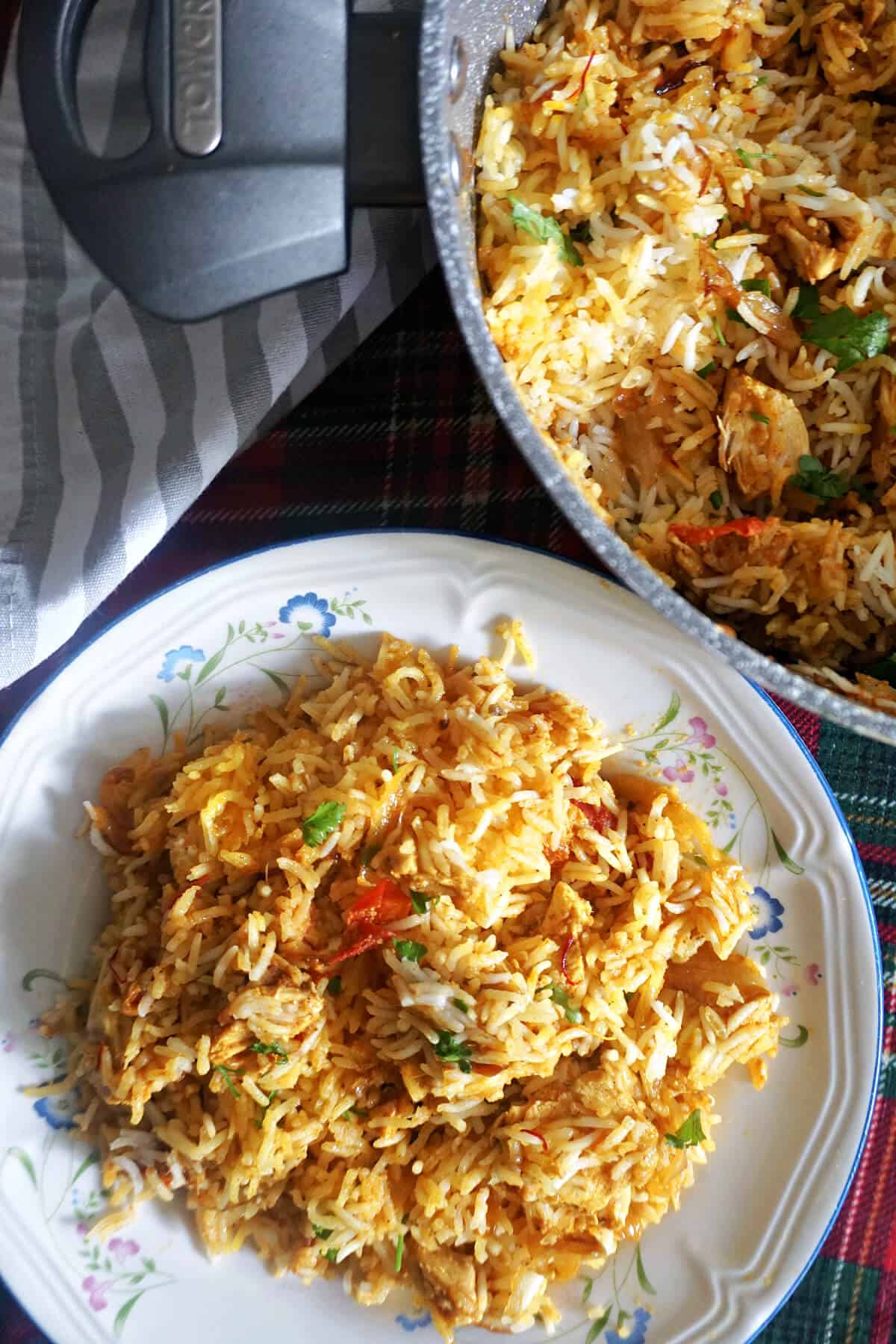
This Leftover Roast Chicken Biryani transforms simple leftovers into a satisfying family-friendly dinner that everyone will enjoy. Unlike a traditional biryani that requires lengthy preparation, this easy version makes clever use of leftover roast chicken to deliver beautiful layers of deliciousness. Wonderfully spiced and spicy, with juicy chicken pieces in a fragrant sauce, and perfectly fluffy rice, what a dish this is!
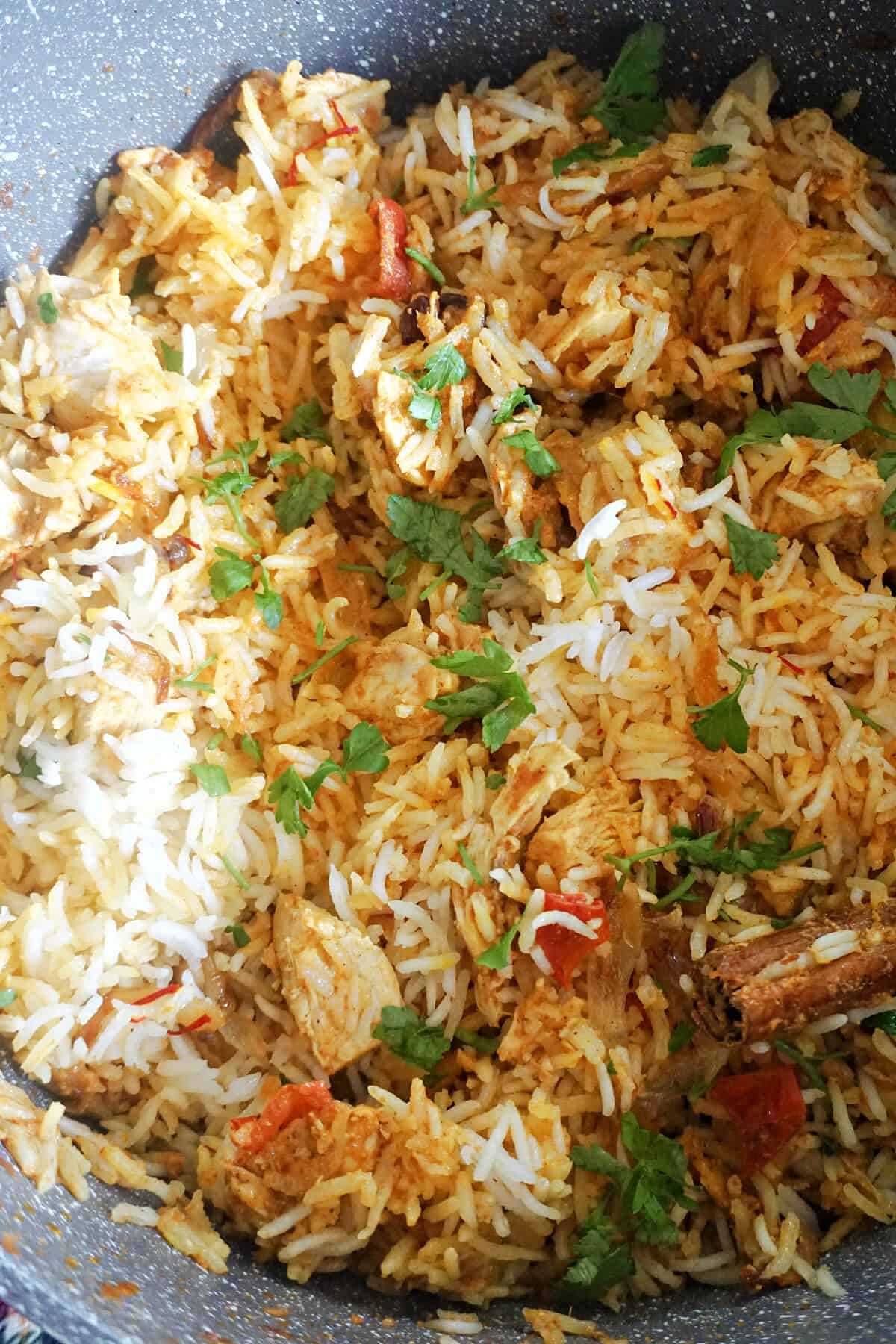
A proper biryani made with leftover chicken, this dish is anything but plain! It has all the flavour of a traditional biryani, but without having to prep and marinate the chicken for hours, then cooking it well until reduced.
If you are looking for something more exciting than sandwiches, this leftover chicken biryani is the most delicious way of giving your leftovers a completely new life. I do love leftovers, and my leftover recipes post is full of delicious leftover ideas.
But this dish is by far one of my favourite! I do have a chicken biryani recipe made from scratch, but yes, it does take some time, even with minimal marinating time. And you don't even need specialist ingredients that you'll never use again!
It still takes just over an hour to make this dish, but it's well worth your time, trust me! I made the biryani sauce myself, and added leftover chicken to it, but if you have leftover chicken curry, you can use that too and all you have to worry about is the rice and layering!
Jump to:
Note!
Go to the recipe card at the bottom of the post for exact quantities and detailed instructions!
Ingredients overview
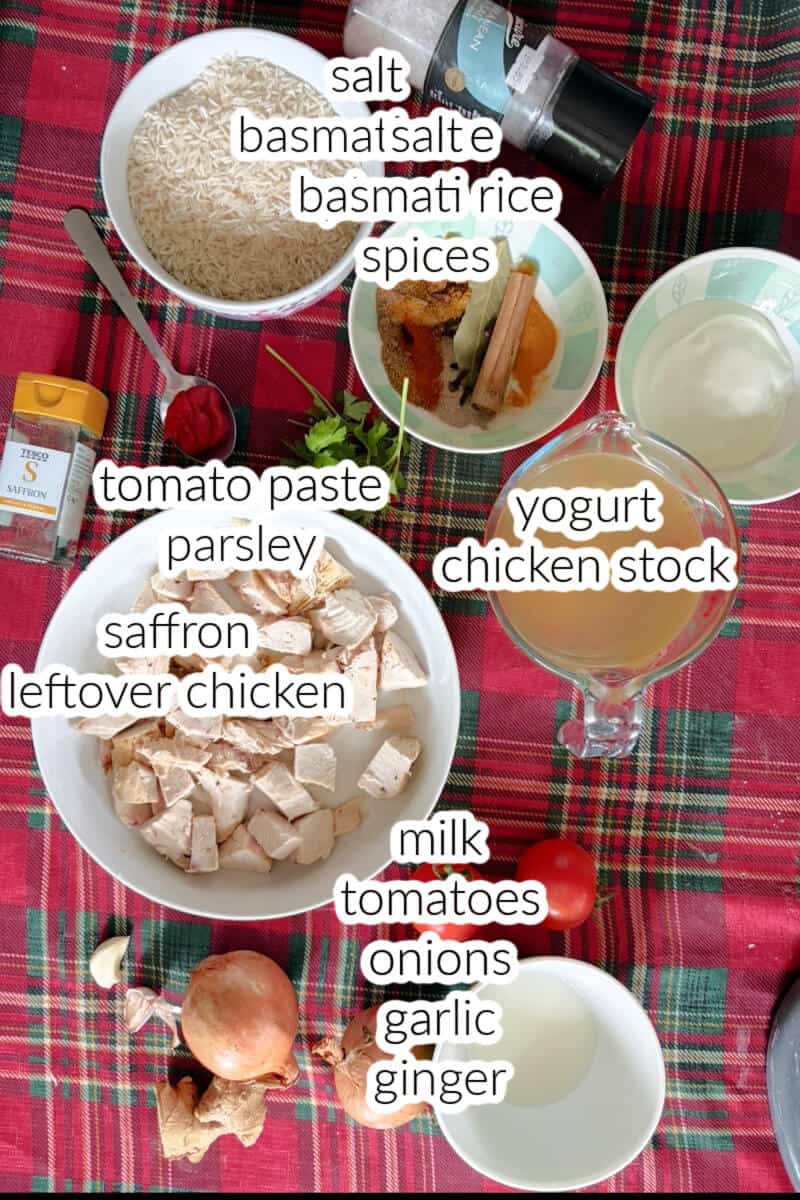
- basmati rice - it's by far the best option for this dish, you can use plain basmati rice or jasmine rice, it's up to you
- leftover roast chicken - either from a whole roasted chicken, spatchcock chicken, roasted chicken legs or roasted chicken breasts. Rotisserie chicken is another great option.
- spices - I used ground turmeric, cumin, coriander, cardamon, hot curry powder, cayenne pepper, cinnamon stick, cloves and bay leaves. It might sound like a lot of spices, but trust me, they all add so much flavour!
- yogurt - either plain yogurt or Green yogurt
- tomatoes and tomato paste - they are used as a base for the biryani sauce
- onions, garlic and ginger - the trio of flavour in any good curry
- saffron - to add colour and flavour to the biryani, you can use ground turmeric if you don't have saffron
- milk - or water, it makes the saffron release its full flavour
- chicken stock - optional, but it does add a lot of flavour. But you can just boil the rice in salted water, and that's fine
- salt - to taste
- oil and butter - the oil is used to cook the sauce, while the butter is added to the final step to create dum (steaming the biryani to cook the rice to perfection)
Step-by-step photos and instructions
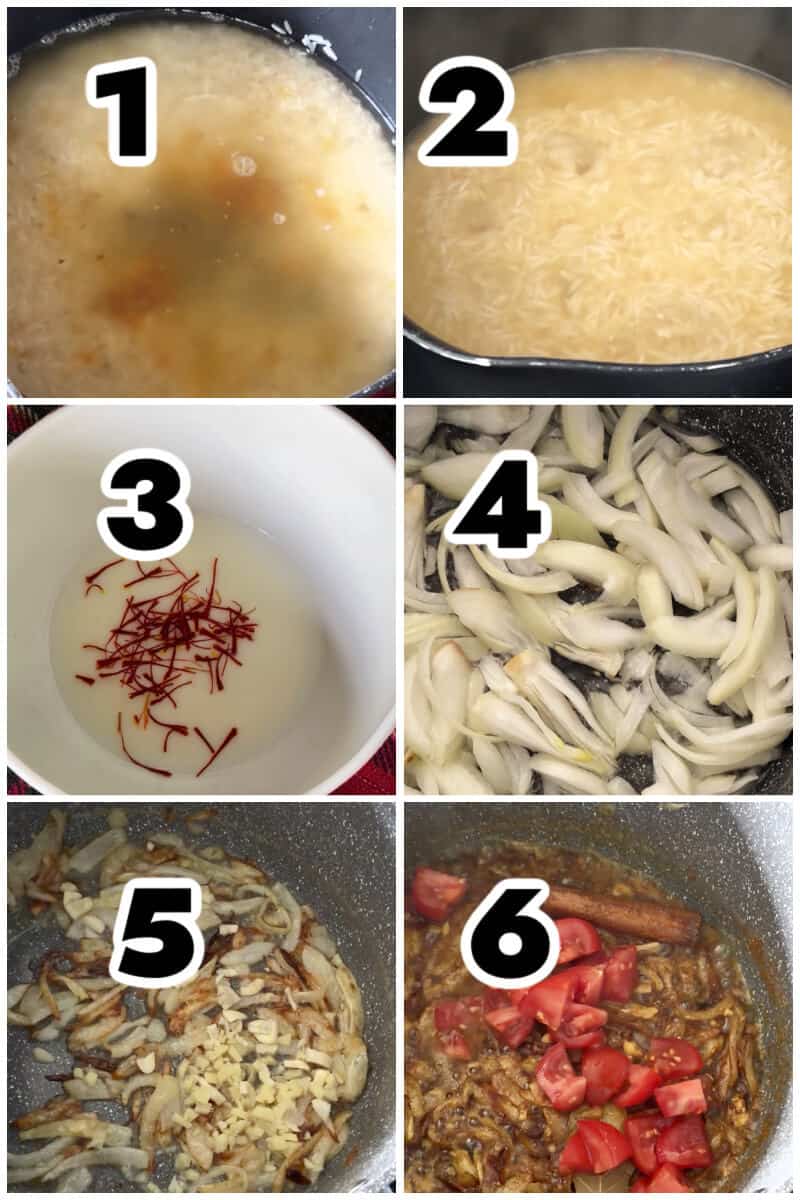
- rinse the rice under cold water until the water runs clear
- add the rice to a pan, pour over the chicken stock, and cook it until the rice is about 80% done, so it still has a bit of a bite to it and most of the liquid is evaporated
- reserve 2 tablespoons of the stock, and drain the rest
- add the saffron and milk to a small bowl and mix well; set aside
- in a large pot, heat up the oil, and fry the onions with a pinch of salt until golden
- reserve half of the onions for layering, then add the chopped garlic and ginger to the rest of the onions
- add the spices and mix well, then add the chopped tomatoes and tomato paste
- place the lid on, and leave the tomatoes to cook for 2-3 minutes or until mushy
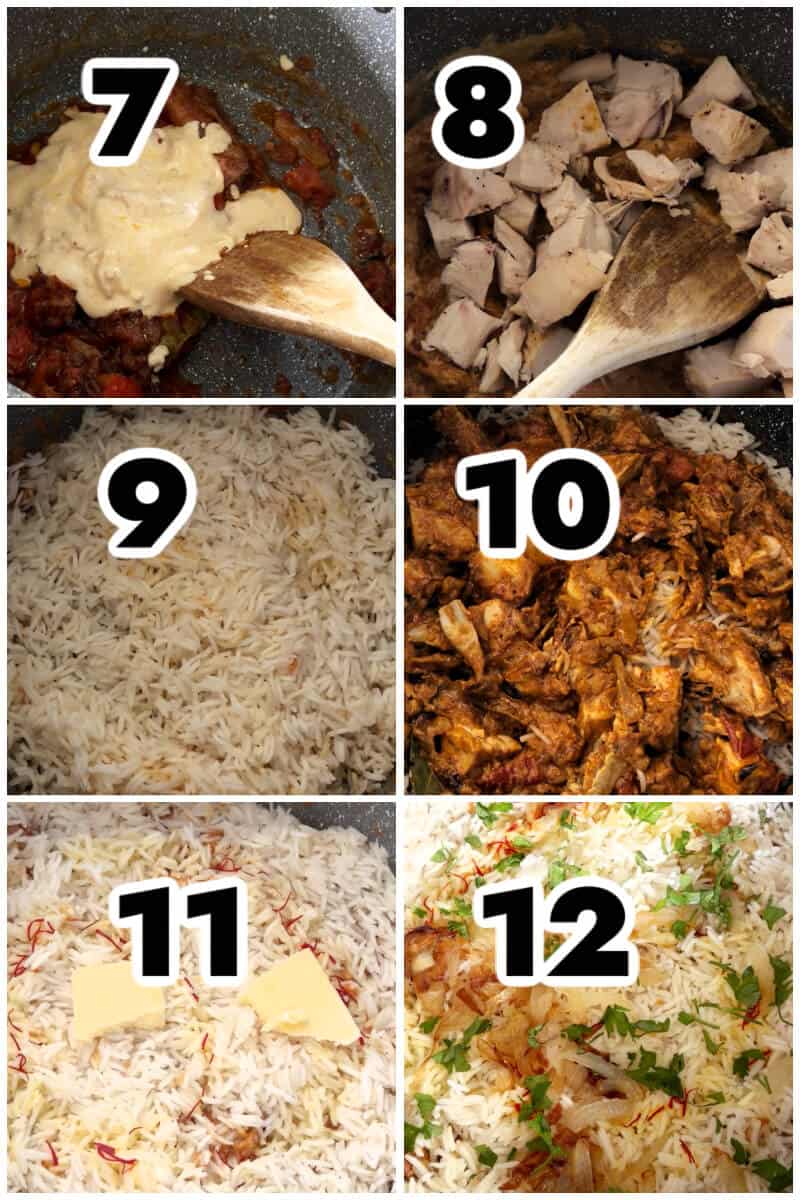
- add the yogurt to the sauce and mix well
- in goes the cubed chicken, mix well to combine, season with salt and remove it from the pot
- add half of the preboiled rice to the bottom of the pan, top it with the chicken, then the remaining rice goes on top
- pour over the saffron milk in a circle, add the butter and the reserved onions, and place the lid on
- leave it to cook on a low heat for 20 minutes
- remove the pan from the heat, but keep the lid on for an extra 10 minutes
- garnish with fresh parsley, then use a fork to fluffy everything up
Expert tips
One of the most important flavour-building step is caramelising the onions. Add enough oil so that they fry gently on a low heat, that will allow the colour to buil gradually rather than turn brown too quickly, while the onions aren't soft enough.
Cook the rice until 80% done, it will carry on cooking to a fluffy perfection later on, so we don't need it to be fully cooked.
Don't skip the resting time, once the 20 minutes are over, do not remove the lid straight away, but keep it on for an extra 10 minutes. This allows the flavour to settle and the rice to turn fluffy.
Dum cooking is the final stage of cooking the biryani. The layered chicken and rice and sealed well with a lid and cooked on a low heat to allow the flavour to develop and the rice to finish steaming. Do not increase the heat or the bottom rice will burn.
Other similar recipes

If you’ve liked this recipe or any other recipe on the blog then don’t forget to rate the recipe and let me know how you got on in the comments below, I love hearing from you! You can also FOLLOW ME on FACEBOOK, INSTAGRAM , YOUTUBE, TIK TOK , FLIPBOARD and PINTEREST to see more delicious food and what I’m getting up to.

Leftover Roast Chicken Biryani
Video
Ingredients
- 300 g leftover chicken, cubed (2 cups)
- 65 ml vegetable oil (¼ cup)
- 2 tomatoes on the vine
- 1 tablespoon tomato puree
- 2 large onions
- 2 cloves of garlic
- 2 cm fresh ginger (1 inch)
- 300 g basmati rice ( 1 ½ cups)
- 1 teaspoon salt
- 2 tablespoon fresh parsley (or coriander / cilantro)
- a pinch of saffron
- 65 ml milk (¼ cup)
- 500 ml chicken stock (broth) (or water)
- 65 ml plain yogurt (¼ cup)
- 30 g butter (2 tbsp)
Spices
- 1 tablespoon hot curry powder
- 1 teaspoon ground coriander
- 1 teaspoon ground cumin
- 1 teaspoon ground turmeric
- ½ teaspoon ground cardamom
- 1 teaspoon whole cloves
- ½ teaspoon cayenne pepper
- 1 cinnamon stick
Instructions
- Rinse the rice under cold water until the water runs clear.
- Add the rice to a pan, pour over the chicken stock or water, and boil on a medium heat until the rice is about 80% cooked, so it still has a bite to it, and most of the liquid is evaporated.
- Reserve 2 tablespoons of the stock, and drain the rest.
- In a large, no-stick pan heat up the oil on a low to medium heat, add the onions peeled and chopped julienne, season with a pinch of salt, and fry the onions until golden.
- Reserve half of the onions for layering, then add the peeled and chopped garlic and ginger to the pan.
- Add all the spices and mix well, then add the chopped tomatoes and tomato paste.
- Place a lid on the pan, and leave it to cook for 2-3 minutes until the tomatoes are mushy.
- Add the yogurt and give it a stir, then add the cubed chicken.
- Mix well to combine.
- You can either remove the chicken and sauce from the pan, or use a different non-stick pan.
- Spread half of the partially-cooked rice over the bottom of the pan, spoon the chicken over the rice, then spread the remaining rice over.
- Drizzle the saffron-infused milk over the rice in a circular motion.
- Top with the reserved caramelised onions, drizzle over the reserved rice water, add the butter, then place the lid on, and cook on a low heat for 20 minutes.
- Remove the pan from the heat, but keep the lid on for a further 10 minutes.
- Use a fork to fluff everything up and garnish with chopped parsley or coriander.
Notes
- One of the most important flavour-building step is caramelising the onions. Add enough oil so that they fry gently on a low heat, that will allow the colour to buil gradually rather than turn brown too quickly, while the onions aren't soft enough.
- Cook the rice until 80% done, it will carry on cooking to a fluffy perfection later on, so we don't need it to be fully cooked.
- Don't skip the resting time, once the 20 minutes are over, do not remove the lid straight away, but keep it on for an extra 10 minutes. This allows the flavour to settle and the rice to turn fluffy.
- Dum cooking is the final stage of cooking the biryani. The layered chicken and rice and sealed well with a lid and cooked on a low heat to allow the flavour to develop and the rice to finish steaming. Do not increase the heat or the bottom rice will burn.
Leave a Reply