

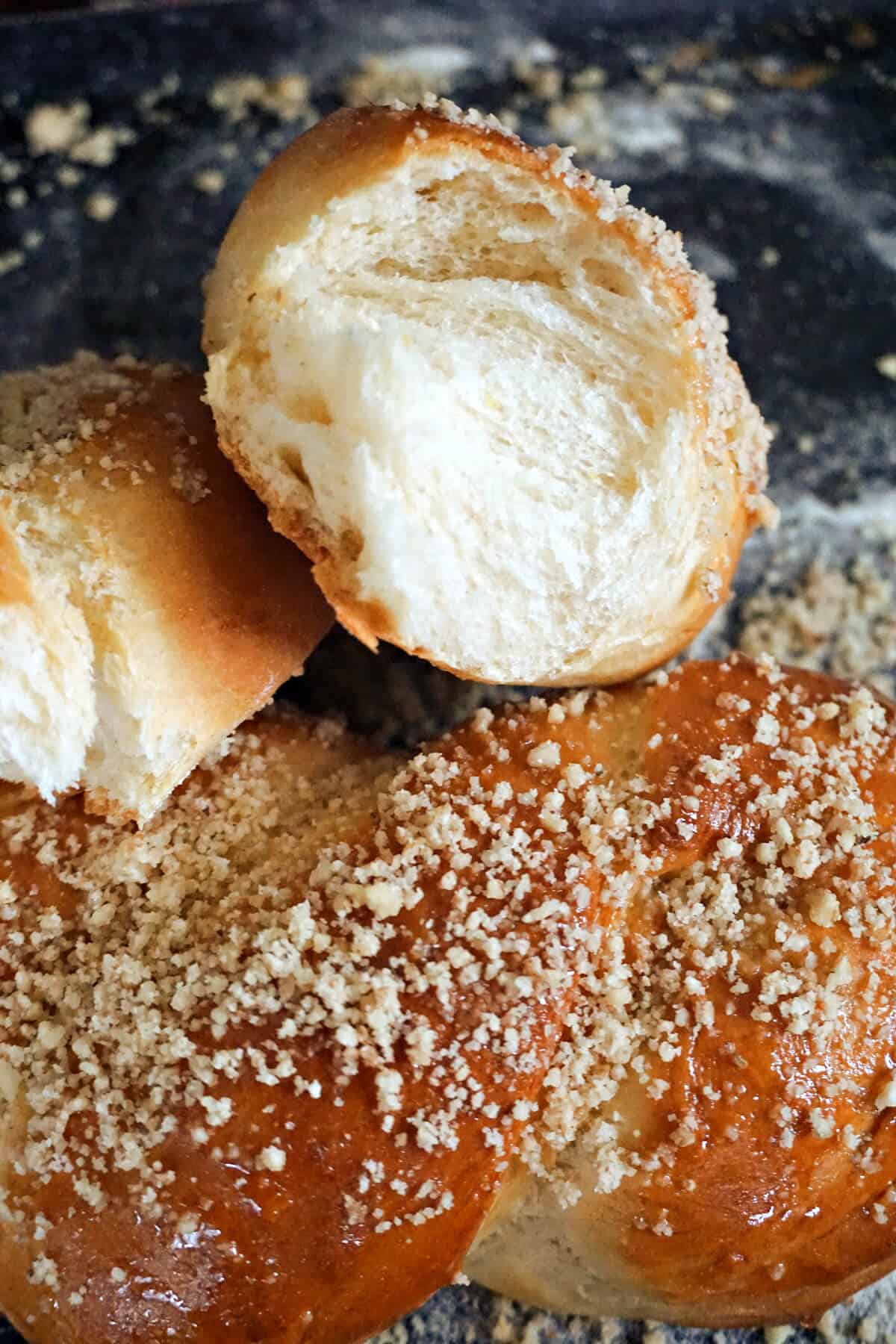
Romanian Mucenici Moldovenesti, or honey-glazed pastries with walnuts, some delicious sweet yeast pastries shaped like the number 8. The mucenici or macinici are a much beloved Romanian sweet treat prepared every year on the 9th March to celebrate the feast of the 40 Martyrs of Sebaste. Wonderfully soft and pillowy, and baked to a golden perfection, these pastries can also be enjoyed all year round.
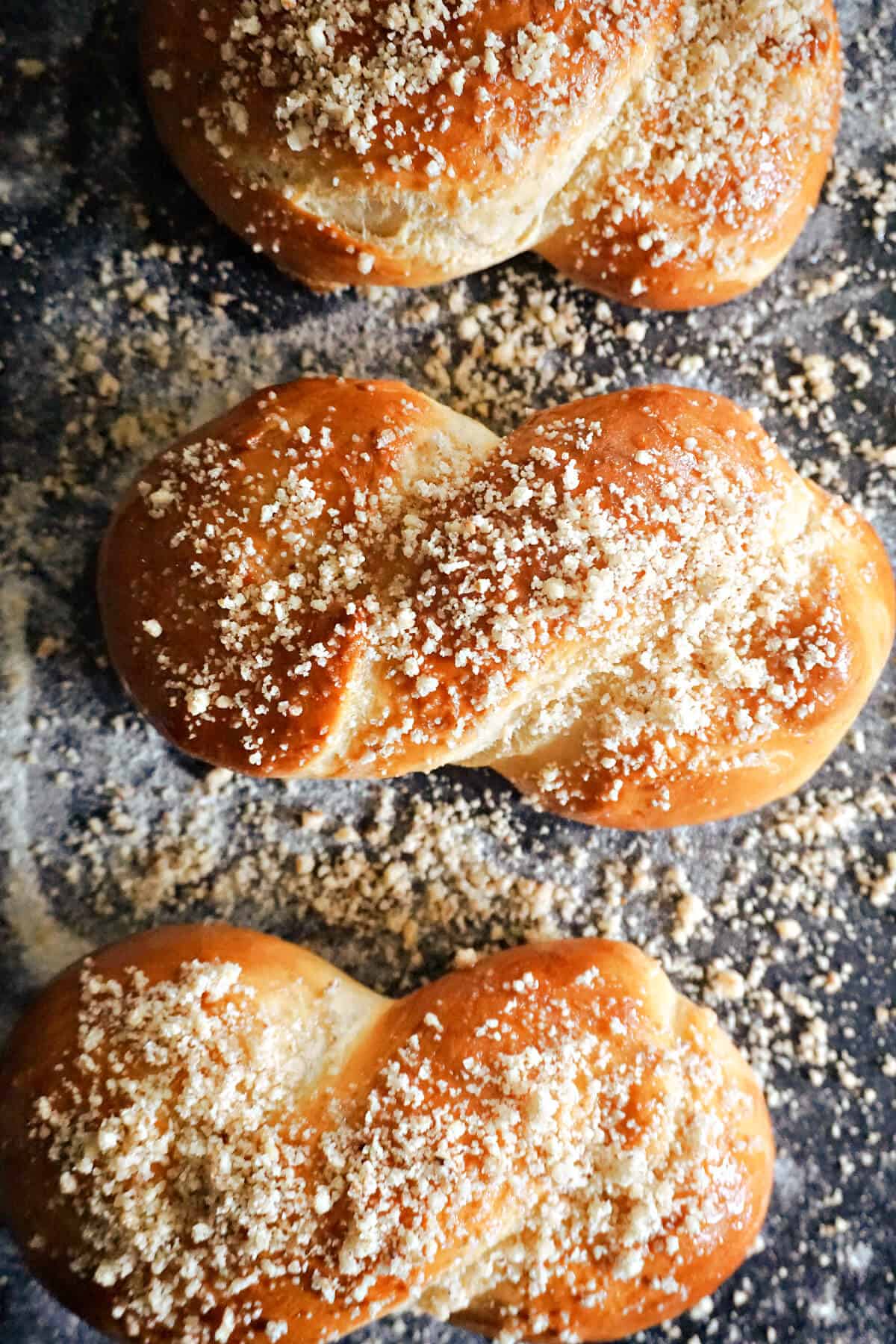
The feast of the 40 Martyrs is an important celebration in the Christian Orthodox Church, and particularly in Romania. In the region of Moldova, mucenici are made from a soft yeast dough that is glazed with honey or a sugar syrup, then topped generously with finely chopped walnuts.
In other regions of the country however, mucenici are small figure of eight dough shapes boiled in a sweet syrup with cinnamon and walnuts. These are the mucenici I actually grew up enjoying as a child, as my parents live in Muntenia, the south-east part of the country.
I do love the sweet brioche-like pastries coated in honey and walnuts, so I wanted to share this recipe with you today. Taste and texture wise, they are similar to the traditional Romanian Cozonac, Romanian Easter Bread, brioche bread, crescent rolls or cardamom brioche buns.
Jump to:
Note!
Go to the recipe card at the bottom of the post for exact quantities and detailed instructions!
Ingredients overview
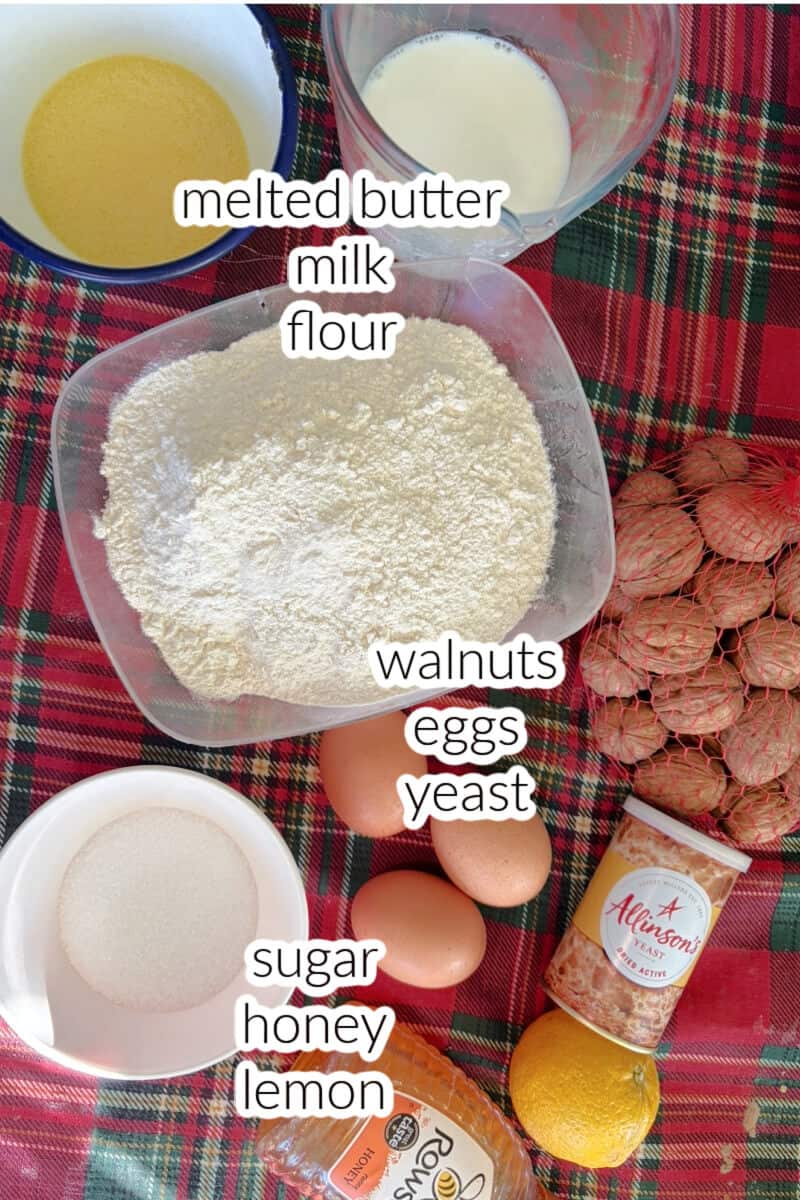
- flour - the best flour for this kind of pastries is the white strong bread flour, with the next best flour to use being the plain white flour
- yeast - I used dried fast-action yeast, which is the most popular option where I live on the Isle of Man, but in Romania fresh yeast is more popular. For this recipe I used 2 teaspoons of dried yeast, you will need 20 grams of fresh yeast if you use that instead
- sugar - I used granulated sugar, caster sugar also ok. You can also adjust the amount of sugar used, I used less, since the pastries are coated in honey anyway, but you can definitely add more sugar to the dough, I would say up to 100 g
- melted butter - adds richness to the dough, helping with a pillowy texture
- eggs - make sure they are at room temperature, as they can slow down the proving time if they are cold
- milk - full-fat milk is the best, make sure it's warm to touch, and not hot, as that can prevent the yeast from working its magic
- walnuts - they are the most popular nuts used in baking in Romania, but you can swap them for pistachios, pecans or any other nuts of your choice
- lemon - we only need the lemon zest for this recipe, the juice can be used to make a delicious honey lemonade
Step-by-step photos and instructions
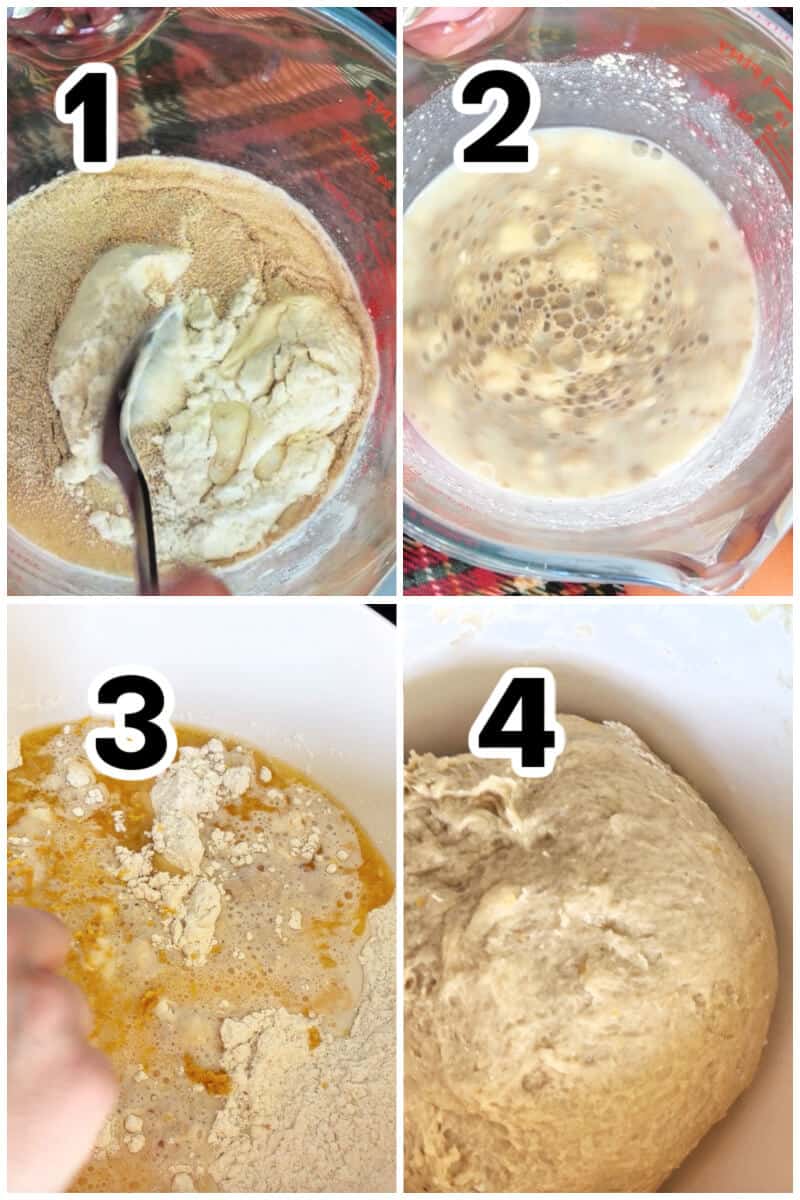
- pour the warm milk into a jug, add the yeast, a tablespoon of flour and a tablespoon of sugar, mix well, and set aside for 10-15 minutes until the mixture is frothy
- in a large bowl, sift the flour, add the melted butter, yeast mixture, beaten eggs, lemon zest and sugar
- knead well until the dough is elastic and does not stick to the hands
- cover the bowl with a tea towel, and set it aside to prove in a warm place for 2 hours or until it doubles its volume
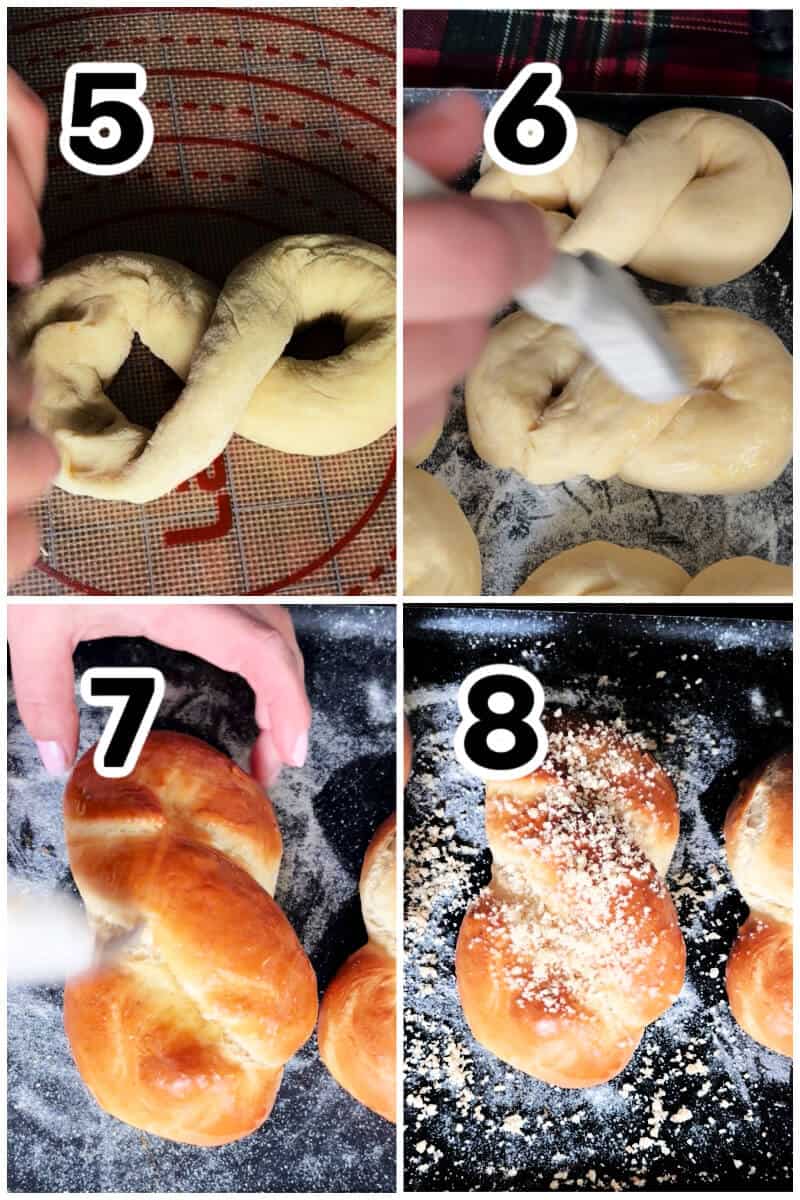
- divide the dough into 8 balls, and shape each ball into a long rope
- then each rope is shaped into a figure of 8
- transfer them onto 2 baking trays, and leave them to prove for a second time, for up to one hour, until the pastries double their size
- brush them with beaten egg and bake in the preheated oven at 180 degrees Celsius (350 Fahrenheit) for 20 minutes or until golden
- brush the pastries with honey as soon as they come out of the oven, and top with finely chopped walnuts
- allow them to cool down before enjoying them
Expert tips
The room temperature plays a crucial role in the proving time. The dough will rise nicely in a warm room, a cold place will slow the proving time, or might prevent the yeast from working at all.
If my kitchen isn't warm enough, I usually turn the oven on to the lowest temperature possible, then turn it off after 5 minutes. Then I prove the dough in the warm oven. Make sure the oven isn't too hot, or the dough will flatten.
Handle the pastries with care after brushing them with honey, they will be very hot once they come out of the oven, and the hot honey can cause burns!
If you’ve liked this recipe or any other recipe on the blog then don’t forget to rate the recipe and let me know how you got on in the comments below, I love hearing from you! You can also FOLLOW ME on FACEBOOK, INSTAGRAM , YOUTUBE, TIK TOK , FLIPBOARD and PINTEREST to see more delicious food and what I’m getting up to.
Romanian Mucenici (Sweet Honey Walnut Pastries)
Ingredients
- 500 g strong bread flour (4 cups)
- 180 ml full-fat milk (6 fl oz)
- 60 ml melted butter ( 3 fl oz)
- 75 g granulated sugar (⅓ cup)
- 3 eggs
- zest from one lemon
- 2 teaspoon dried fast-action yeast
- 50 g walnuts, finely chopped (⅓ cup)
- 8 tablespoon runny honey
Would you like to save this?
Instructions
- Warm up the milk to a luke-warm temperature, and pour it into a jug.
- Add the yeast, a tablespoon of flour and tablespoon of sugar, and mix well.
- Set it aside for 10-15 minutes or until the mixture becomes frothy.
- In a large mixing bowl, sift the flour, add the yeast mixture, eggs beaten well (reserve 2-3 tablespoons of beaten egg to brush the pastries), melted butter, lemon zest and knead everything well into a dough that is elastic, and does not stick to the hands.
- Add more flour if necessary.
- Cover the bowl with a tea towel, and leave it to prove in a warm place for 2 hours, or until it doubles its size.
- Divide the dough into 8 balls, and shape each ball into a rope that is ⅞ inches long.
- Shape the rope into a figure 8, then transfer all the pastries to 2 baking trays, leaving plenty of room between them.
- Leave them to prove again for up to 1 hour until they double their size again.
- Brush the pastries with the reserved beaten egg, and bake in the preheated oven at 180 degrees Celsius (350 Fahrenheit) for 20 minutes or until golden.
- Once the pastries come out of the oven, brush them with honey, and top with finely chopped walnuts.
- Allow them to cool down before serving.
Video
Notes
- The room temperature plays a crucial role in the proving time. The dough will rise nicely in a warm room, a cold place will slow the proving time, or might prevent the yeast from working at all.
- If my kitchen isn't warm enough, I usually turn the oven on to the lowest temperature possible, then turn it off after 5 minutes. Then I prove the dough in the warm oven. Make sure the oven isn't too hot, or the dough will flatten.
- Handle the pastries with care after brushing them with honey, they will be very hot once they come out of the oven, and the hot honey can cause burns!
Leave a Reply