
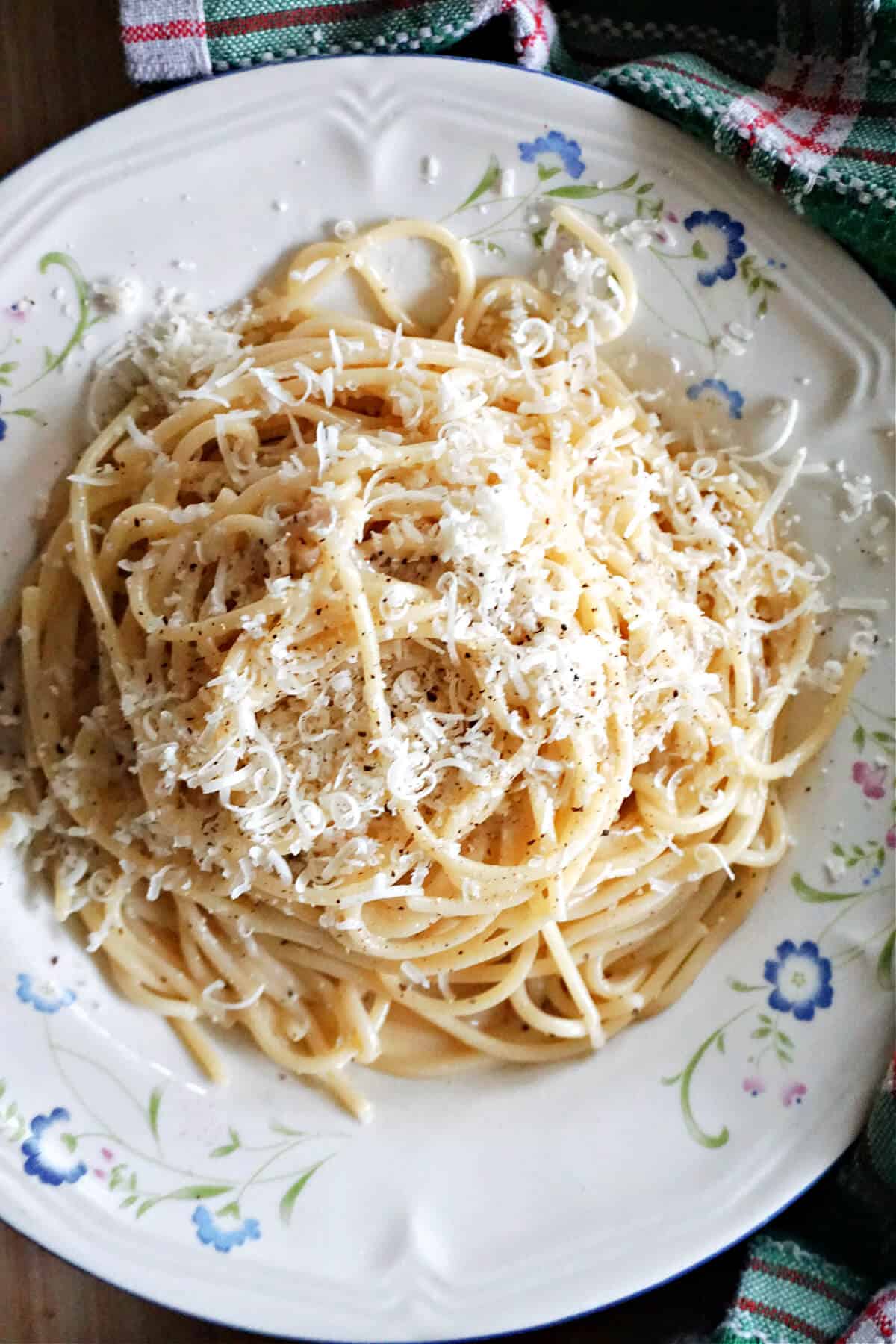
Spaghetti Cacio e Pepe (Cheese and Pepper), an Italian pasta recipe that is made with only 4 simple ingredients: spaghetti, black pepper, pecorino cheese and a splash of olive oil. This iconic Roman dish, known for its bold flavour and simplicity, is perfect as a romantic meal for 2, or just a fancy dinner whenever you feel like spoiling your taste buds. Quick, simple, what a treat!
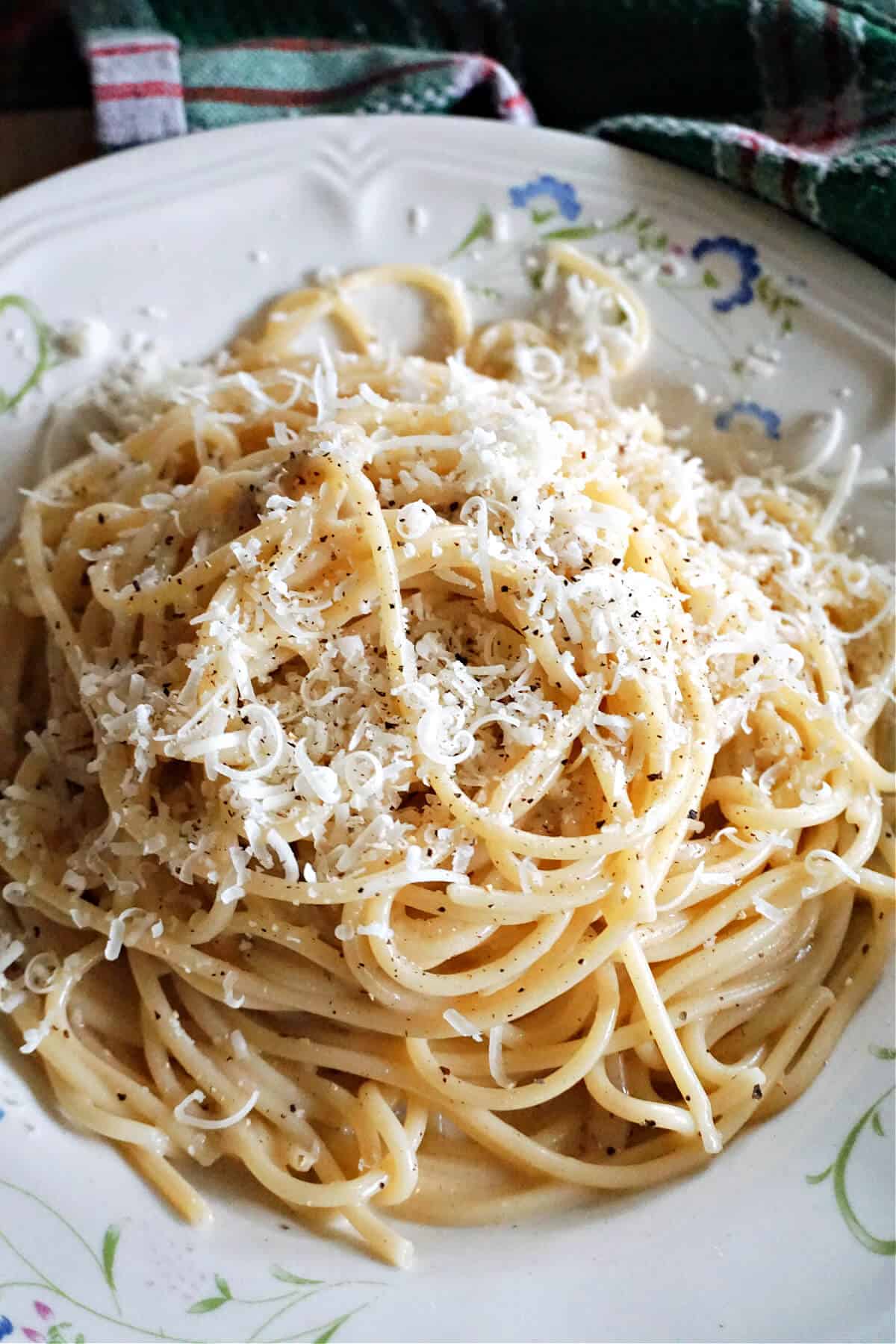
This pasta cacio e pepe is one of the best examples that sometimes less is more. You don't have complicated sauces, lots of heavy cream, butter or both. It's just a very simple dish with nothing but pasta, cheese and lots of black pepper to steal the show.
You might think that's quite a lot of black pepper, and it is. But it works so well in this recipe, that adding any less would spoil the beauty of this dish. It's a bit like a peppercorn sauce for steak which uses a lot of pepper, but it gives you the very best sauce a steak could possibly ask for.
But it's not just the black pepper that makes this dish unique, but rather the combination pecorino cheese and black pepper. Unlike parmesan, which is made from cows' milk, pecorino is made from ewe's milk, it's saltier and has a higher fat content that gives us the best sauce for pasta.
And while this dish has a rather small list of ingredients, and it is easy to make, there are a few things that would go wrong with this recipe, and I'll go through them all in this post.
But rest assured, it's a dish that you'd definitely want to make again and again, it's elegant and fancy enough to rival a restaurant-style pasta dish, plus it's super quick, so you job in the kitchen is done in no time.
Jump to:
Note!
Go to the recipe card at the bottom of the post for exact quantities and detailed instructions!
Ingredients overview
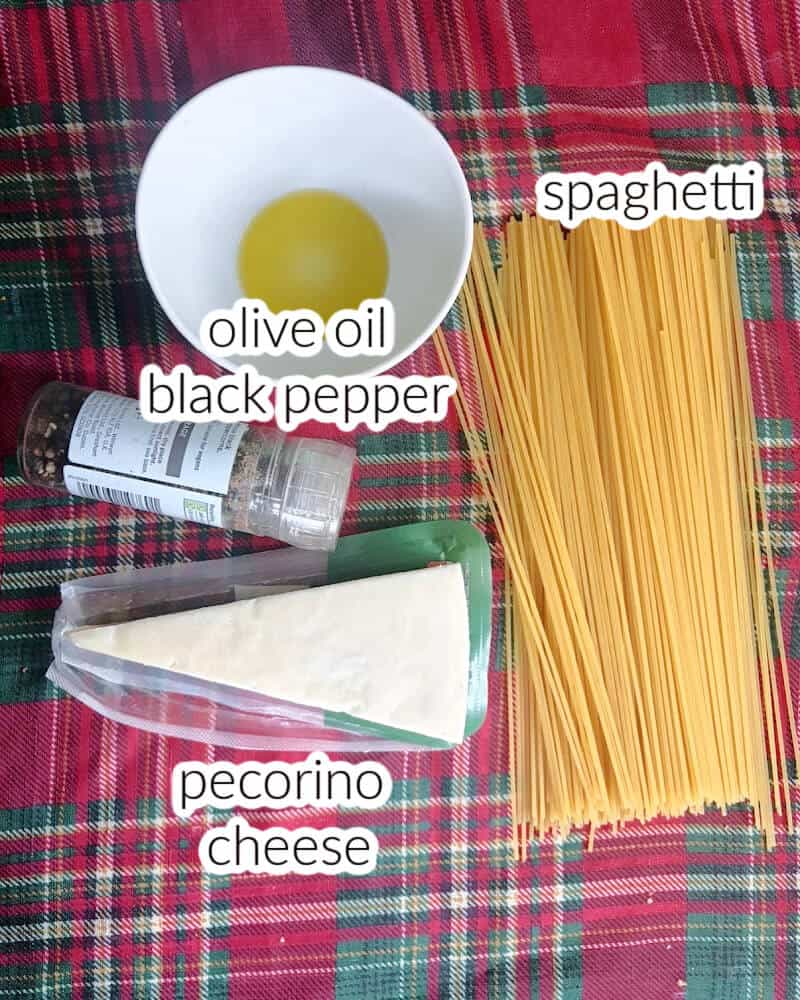
- spaghetti - it's our preferred pasta, so I always have some around. Other excellent choices for this dish are linguine, buccatini or tonnarelli
- pecorino cheese - it's the best cheese for this dish, and although some recipes might call for substitutions, the end result won't be the same
- black pepper - I would wholeheartedly recommend freshly-ground black pepper over store-bought ground pepper which is way too fine for this recipe. Slightly coarse ground black pepper adds a nice texture and a wonderful heat
- olive oil - just a splash of it added to the toasted black pepper makes the flavour stand out even better
Step-by-step photos and instructions
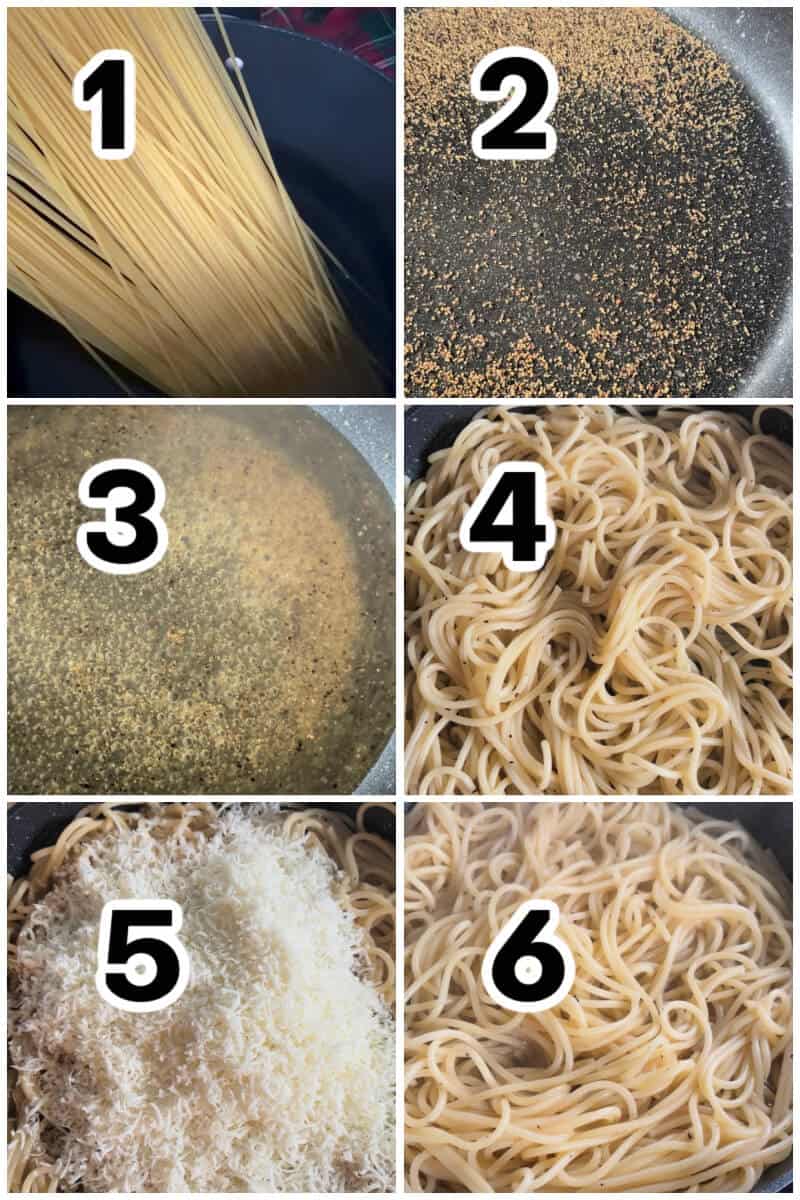
- add the spaghetti to salted boiled water and cook for 2 minutes less than the packet instructions state
- in the meantime, heat up a frying pan on a medium heat, add the freshly-ground black pepper and toast it lightly for 1 minute just until fragrant
- add the olive oil and toss again
- add a quarter of a cup of pasta water, and turn the heat low
- once the pasta is cooked, transfer the spaghetti to the peppery water and toss it for 1 minute to finish cooking and absorb all the flavour
- remove the pan from the heat, and allow the pasta to cool down slightly for 1 minute, then add the finely grated cheese and toss vigorously until you you get a creamy texture
- splash more pasta water as you toss until the sauce turns smooth and glossy and coats the pasta well
- serve with extra cheese and black pepper
Expert tips
Always remove the pan from the heat before mixing in the cheese, or it will go clumpy, rather than smooth and creamy. The same goes for pasta carbonara, where the eggs split over high heat.
The cheese has to be finely grated for a smooth finish, coarsely grated pecorino will result in lumpy sauce. Always use the starchy water in which the pasta cooked, it makes the best base for any sauce, plus it clings better to the cooked pasta.
Lightly toasting the black pepper enhances the flavour, I highly recommend this step, you will definitely notice the difference. Once the pasta goes in, you really need to toss vigorously for a smooth finish.
Recipe FAQs
Cacio e pepe becomes clumpy when it's exposed to a high heat. Always remove the pan from the heat and allow it to cool down for one minute before adding the cheese. Add pasta water gradually and toss vigurously. If the sauce does clump, add some warm water, and toss again quickly.
The short answer is yes, but you won't have the same result. Parmesan is made from cows' milk, while pecorino is made from ewe's milk, so it has a higher fat content which works better for a smoother sauce.
If the pasta is too watery, it means too much starchy pasta water was used. To fix this, add more cheese and toss really well to help the sauce thicken.
No, once the sauce cools down, it will become clumpy and rubbery. It is best to serve the pasta immediately for the best experience.
Other spaghetti recipes you might like
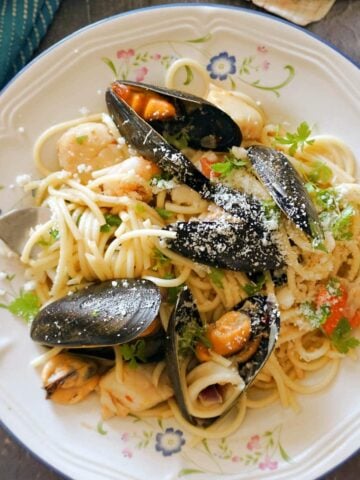
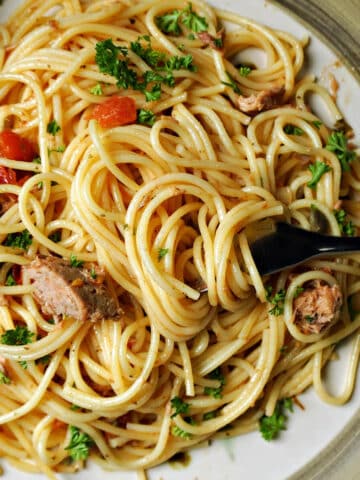
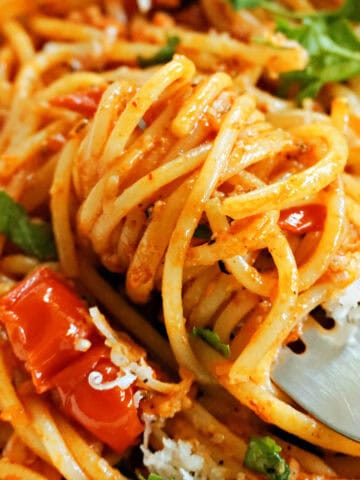
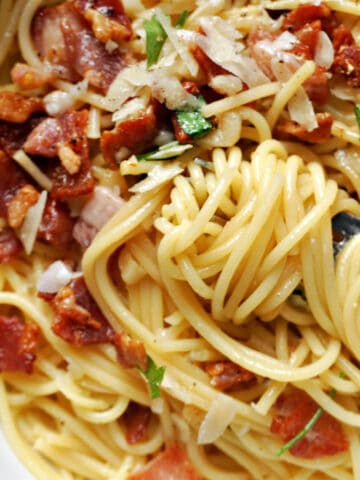
If you’ve liked this recipe or any other recipe on the blog then don’t forget to rate the recipe and let me know how you got on in the comments below, I love hearing from you! You can also FOLLOW ME on FACEBOOK, INSTAGRAM , YOUTUBE, TIK TOK , FLIPBOARD and PINTEREST to see more delicious food and what I’m getting up to.
Spaghetti Cacio e Pepe Recipe
Ingredients
- 200 g spaghetti (7 oz)
- 90 g pecorino cheese (3 oz)
- 1 teaspoon extra virgin olive oil
- 2 teaspoon freshly-ground black pepper
Would you like to save this?
Instructions
- Add the spaghetti to a pan of boiling salted water and cook for 2 minutes less than the packet instructions recommend, so the pasta is just slightly al dente.
- Meanwhile, heat up a large frying pan over a medium heat, add the freshly-ground black pepper, and toss for 1 minute until fragrant.
- Add the olive oil and toss again to enhance the flavour.
- Add a quarter of a cup or 65 ml of the pasta water to the pan.
- Once the pasta is done cooking, reserve half of a cup of the starchy water, then transfer the pasta to the peppery water, and lower the heat to low.
- Toss the spaghetti for 1 minute to finish cooking and absorb the peppery water.
- Remove the pan from the heat, and allow the pasta to cool down for 1 minute.
- Add the finely grated pecorino and toss vigorously, adding more of the reserved pasta water until you get a smooth, creamy sauce.
- Serve immediately with extra grated pecorino and black pepper.
Video
Notes
- Always remove the pan from the heat before mixing in the cheese, or it will go clumpy, rather than smooth and creamy. The same goes for pasta carbonara, where the eggs split over high heat.
- The cheese has to be finely grated for a smooth finish, coarsely grated pecorino will result in lumpy sauce. Always use the starchy water in which the pasta cooked, it makes the best base for any sauce, plus it clings better to the cooked pasta.
- Lightly toasting the black pepper enhances the flavour, I highly recommend this step, you will definitely notice the difference. Once the pasta goes in, you really need to toss vigorously for a smooth finish.
Leave a Reply