
Homemade Fresh Pasta Recipe with or without a pasta maker, simple and failproof with only 2 ingredients. This is a basic Italian pasta dough that can be cut into any shape from fettuccine, spaghetti, penne, etc but it can also be used for lasagna, ravioli, tortellini and much more. I will show you exactly how to make the dough, how to roll and cut it with both traditional and machine methods.
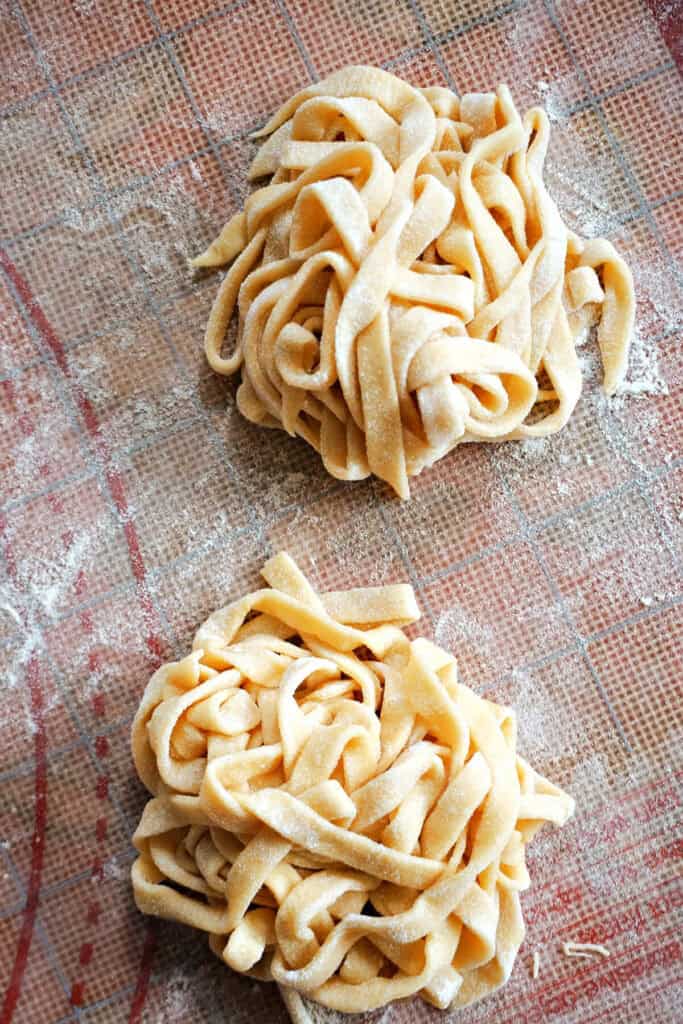
Fresh pasta is one of those things that sound intimidating or too hard to achieve, but once you understand the basics, it's incredibly rewarding and surprisingly simple. Granted, pasta is easily available in any shop, it comes in any shape and is more than affordable too, but making your own is so fun, trust me!
I will show you how to make a simple pasta dough just like an Italian nonna would, there are a few easy steps and 2 ingredients: eggs and flour. If you have 00 flour, which is traditionally used in Italy, perfect, if not, plain or everyday flour works just fine, that's what I used.
All you have to keep in mind is the ratio 100 g flour to 1 egg (or ⅔ cup to 1 large egg). I made my dough with 300 g plain flour and 3 eggs, and it easy fed 2 grown-ups and 2 children, so you can adjust the amounts depending on how many people you cook for.
This pasta dough can be used for literally any pasta dishes, from the simplest, like a fresh tomato and basil pasta, to the fanciest pasta dishes, lasagne, homemade ravioli and so much more.
Jump to:
Note!
Go to the recipe card at the bottom of the post for exact quantities and detailed instructions!
Ingredients overview
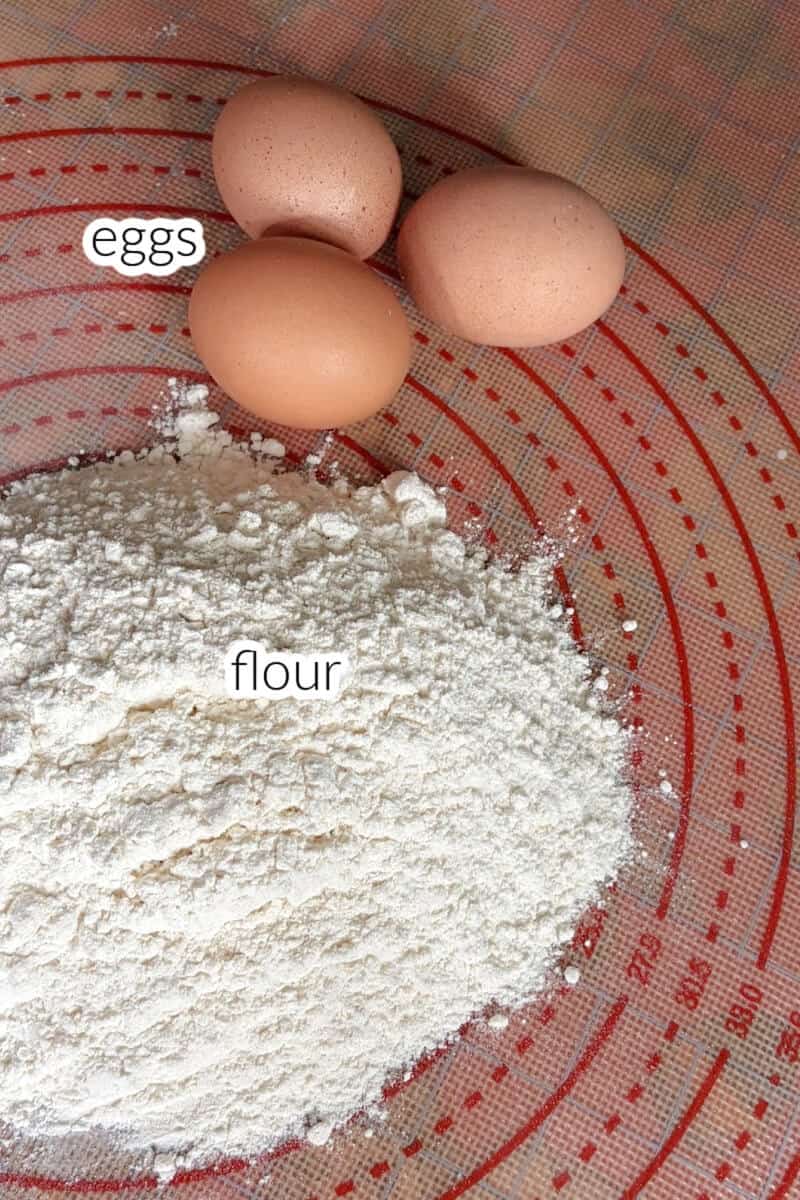
- eggs - I used 3 large eggs, at room temperature - this is important, as it can affect the quality of the dough
- flour - to make sure you measure it well and sift it before use
Step-by-step photos and instructions
How to make pasta dough
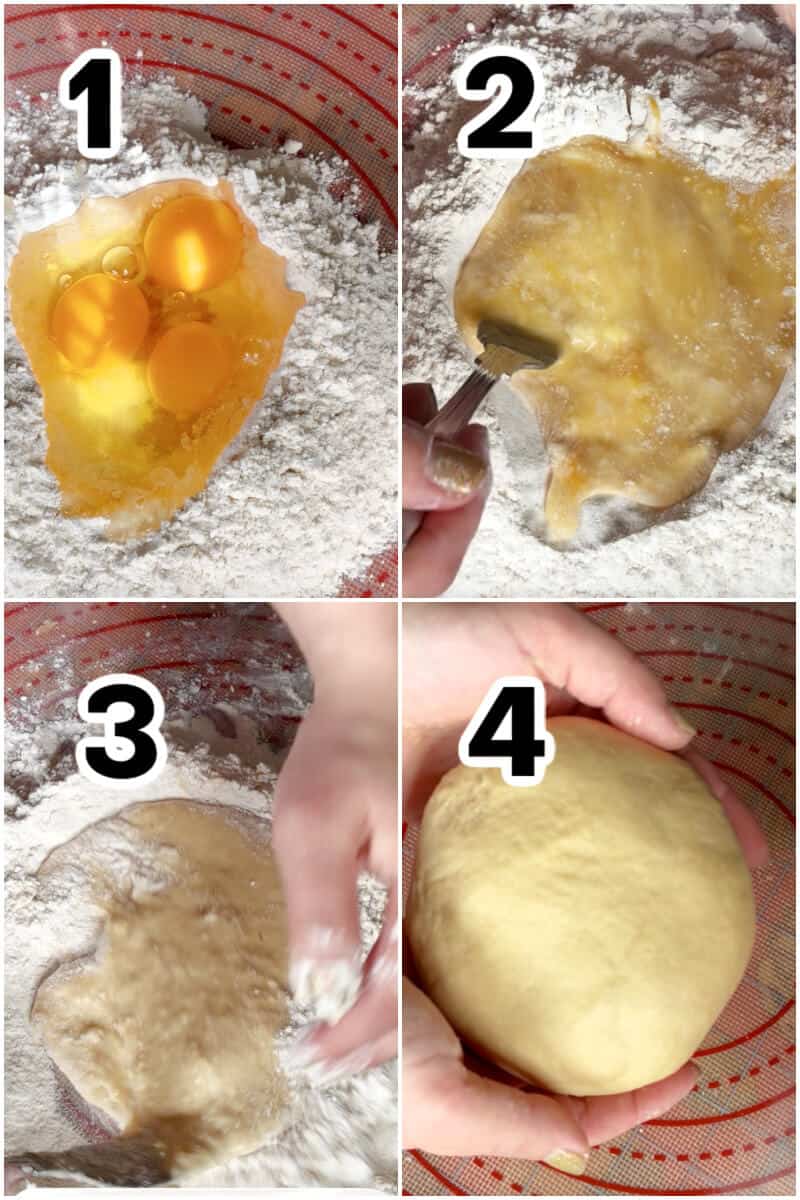
- sift the flour, make a well in the middle, crack the eggs in, and use a fork to beat the eggs well, gradually incorporating the flour from the edges
- keep pulling flour in until a rough dough forms
- use you hands to knead the dough well until you get a smooth and elastic dough that does not stick to your hands
- cover the dough with a tea towel, and leave it to rest on the counter or work surface for 30 minutes
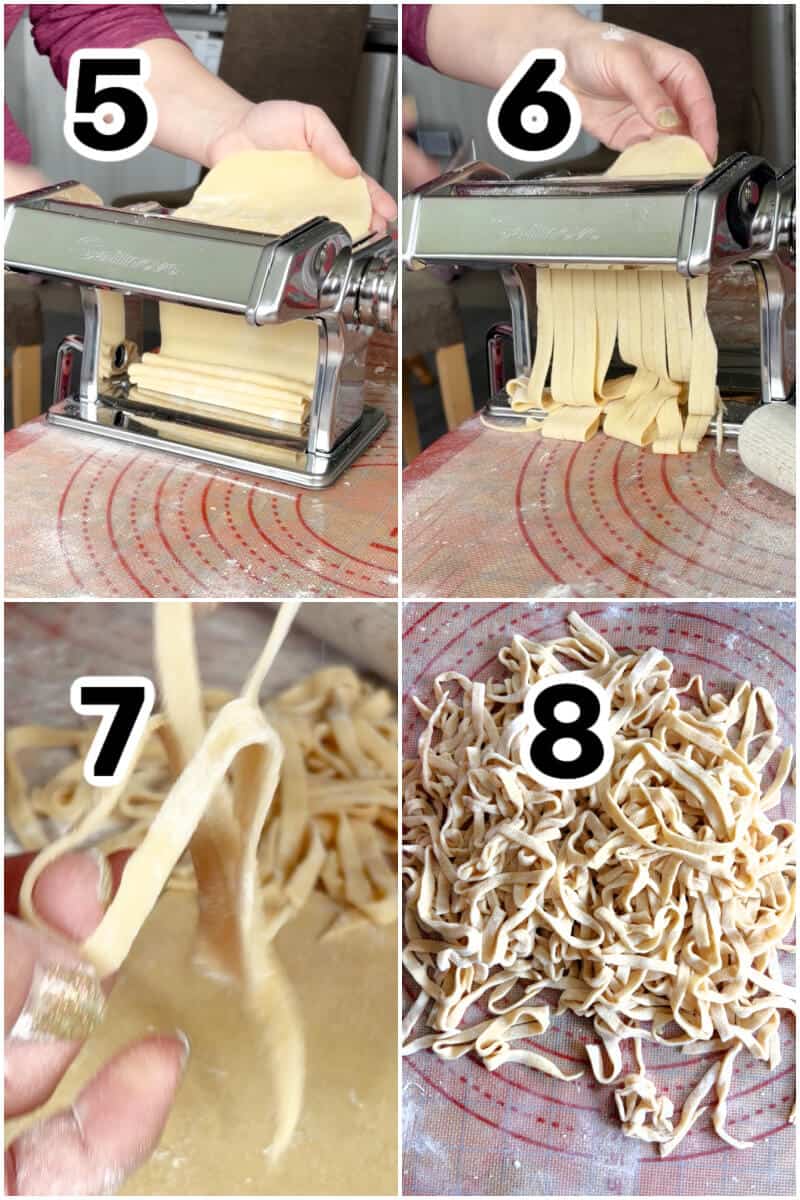
How to roll the dough with a pasta machine
- set your pasta machine to the widest setting, mine is number 2, but every pasta machine can be different
- cut the dough into 4, and roll each dough roughly with a rolling pin
- pass the rolled dough through the pasta machine
- roll it in half, and pass it through again
- gradually reduce the thickness, one thickness at a time, until you get to 6 or 7
- use the pasta machine cutter to slice into strips or any other shape you like
- to cook the pasta, bring a large pot of salted water to the boil, and boil to the desired texture
How to roll the dough by hand
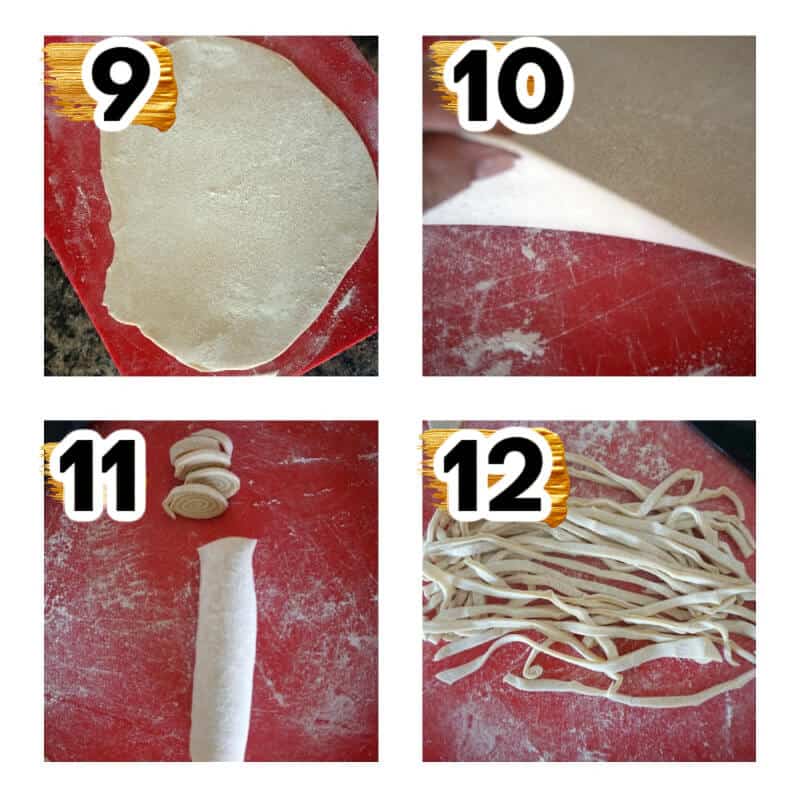
- divide the dough in 4, and dust the work surface with more flour
- use a rolling pin to roll each dough thinly, then start rolling the dough into a sausage
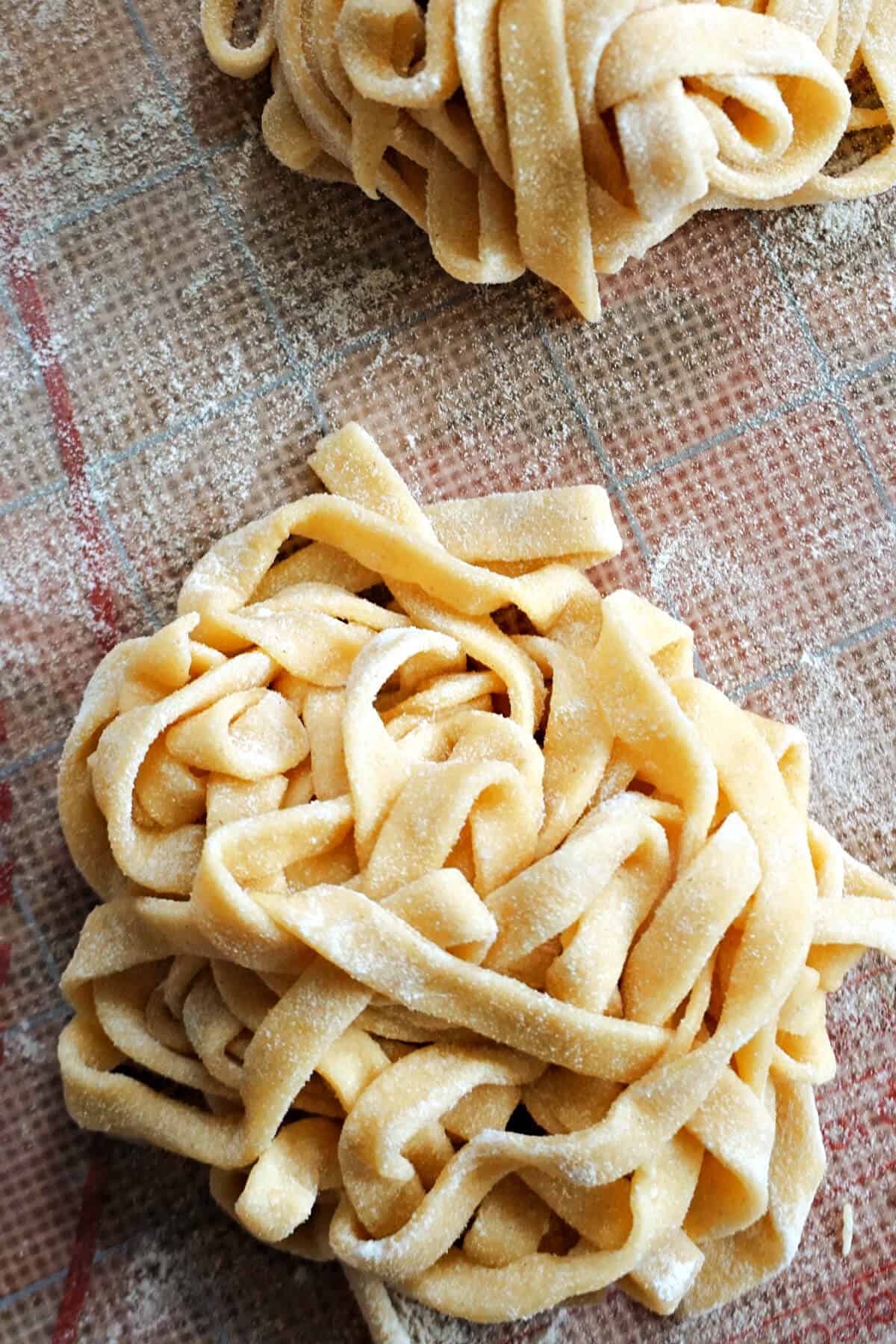
- slice the sausage thinly ( see photo no 12), then stretch the pasta and leave to dry for at least 15 minutes
- bring a pot of salted water to the boil, and boil the pasta until al dente or the desired texture
Expert tips
The dough should feel smooth and elastic and not sticky nor dry, but slightly springy to touch. If it feels too dry, add a bit of water, it it's too wet, add a bit more flour.
Don't skip the resting time, this relaxes the gluten and it makes the dough easy to roll and prevents it from shrinking back.
If you use a pasta machine, roll the dough gradually, starting at the widest settings, and moving down a level at a time until you are happy with the thickness of the dough.
Fresh pasta cooks quicker than dried pasta from the shops, so do keep an eye on it. Do not boil it on a high heat, as it can turn mushy.
How to store the pasta
If you plan to use the noodles straight away, you can do so once they dried up for about 20-30 minutes. But, if you like to store them for future use, leave them to dry at room temperature for at least 12 hours, making sure the pasta is dusted with flour.
Once dry, transfer it to a sealable bag or airtight container, and store it in a cool place, it should last for a few days. If storing fresh pasta that is not fully dried, store it in the fridge. How easy is that!
Pasta dishes you might like

If you’ve liked this recipe or any other recipe on the blog then don’t forget to rate the recipe and let me know how you got on in the comments below, I love hearing from you! You can also FOLLOW ME on FACEBOOK, INSTAGRAM , YOUTUBE, TIK TOK , FLIPBOARD and PINTEREST to see more delicious food and what I’m getting up to.
Homemade Fresh Pasta Recipe
Video
Ingredients
- 300 g plain flour (2 ¼ cups)
- 3 large eggs
Instructions
- Sift the flour, make a well in the middle, crack the eggs in, and use a fork to beat the eggs well, gradually incorporating the flour from the edges.
- Keep pulling flour in until a rough dough forms.
- Use you hands to knead the dough well until you get a smooth and elastic dough that does not stick to your hands.
- Cover the dough with a tea towel, and leave it to rest on the counter or work surface for 30 minutes.
- If you use a pasta machine, set your pasta machine to the widest setting, mine is number 2, but every pasta machine can be different.
- Cut the dough into 4, and roll each dough roughly with a rolling pin.
- Pass the rolled dough through the pasta machine
- Roll it in half, and pass it through againg, gradually reduce the thickness, one thickness at a time, until you get to 6 or 7.
- Use the pasta machine cutter to slice into strips or any other shape you like.
- If you roll the dough by hand, divide the dough in 4, and dust the work surface with more flour.
- Use a rolling pin to roll each dough thinly, then start rolling the dough into a sausage.
- Slice the sausage thinly, then stretch the pasta and leave to dry for at least 15 minutes.
- To cook the pasta, bring a pot of salted water to the boil, and boil the pasta until al dente or the desired texture
Notes
- The dough should feel smooth and elastic and not sticky nor dry, but slightly springy to touch. If it feels too dry, add a bit of water, it it's too wet, add a bit more flour.
- Don't skip the resting time, this relaxes the gluten and it makes the dough easy to roll and prevents it from shrinking back.
- Fresh pasta cooks quicker than dried pasta from the shops, so do keep an eye on it. Do not boil it on a high heat, as it can turn mushy.
Hugh says
This is amazing, reading your lovely post made me forget about The corona news...definitely have to make it while we home these days 😊
Daniela Anderson says
Thank you!