

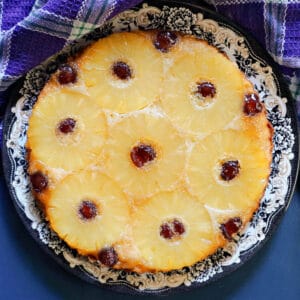
Pineapple Upside-Down Cake, a classic homemade dessert made with pineapples rings, glace cherries and a light and buttery sponge. Adapted from Nigella Lawson's recipe, this cake uses simple ingredients and a blender to make an easy dessert with minimal prep time and effort. Ready in just 40 minutes, this is a wonderful cake for an afternoon tea or a simple dessert to share with your family.
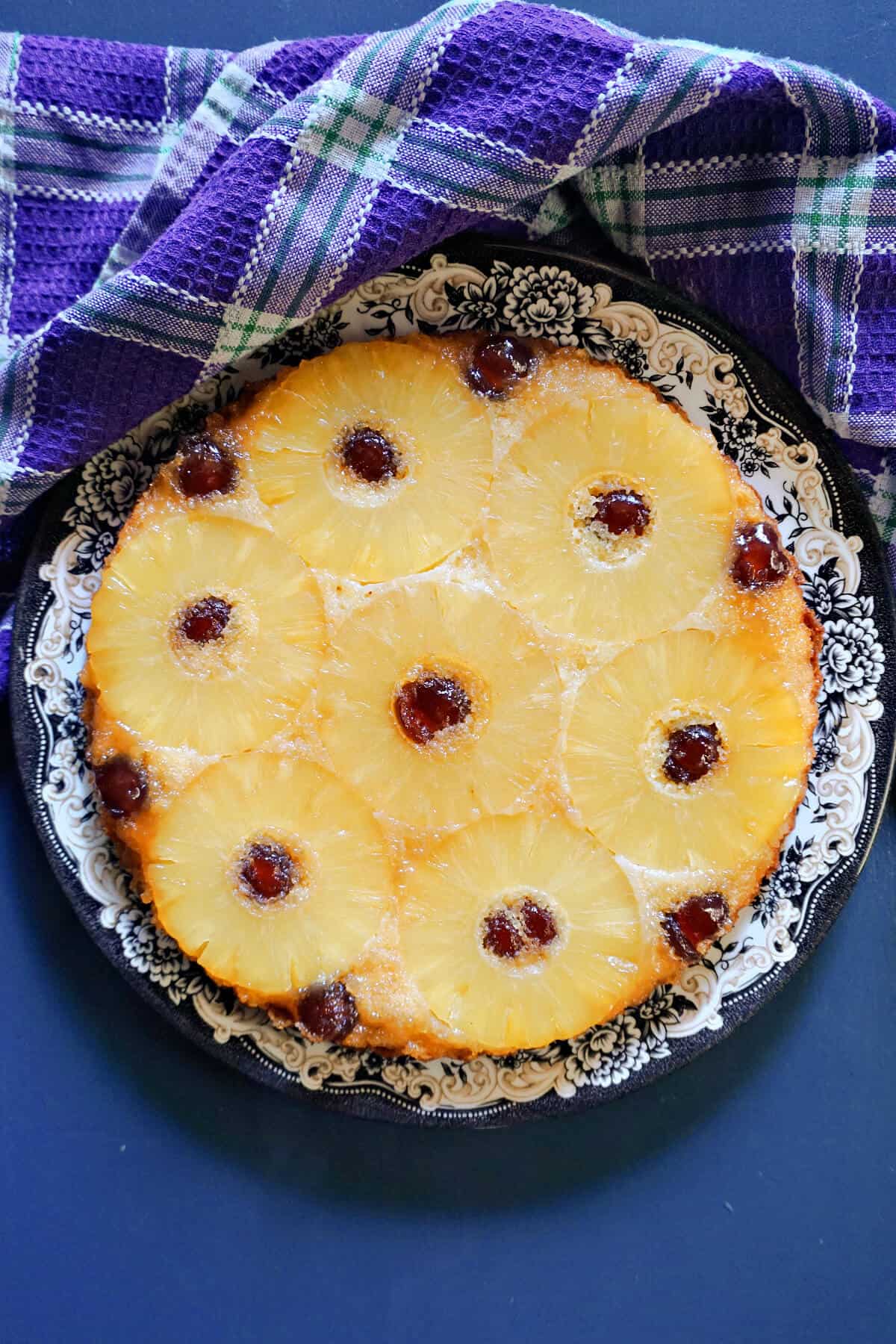
This pineapple upside-down cake is one of those desserts that anyone can bake it, including total beginners in the kitchen. No complicated fillings or toppings, just a blender and a few everyday ingredients.
Upside-down cake might sound a bit confusing, but it's just a cake that has its topping at the bottom on the pan, and the sponge on top, hence the name upside down. But once the cake is baked, you can turn it upside down, and have the sponge down.
This recipe can be easily tweaked to make some many other variations, using all sorts of seasonal fruits. Instead of pineapple juice, you can add lemon or lime juice to the batter, for a nice zesty kick. Or any other juice of your choice, I reckon orange juice is a good choice too.
Otherwise, any other canned or fresh fruit should work here: pears and apples sound particularly good, my Apple Upside Down Cake is delicious, plums: my Plum Upside Down Cake is a real treat, and my Blackberry Upside Down Cake is such a classic Autumn dessert. And let's not forget the amazing Banana Upside Down Cake that is cooked entirely in a frying pan on the stove!
Jump to:
Note!
Go to the recipe card at the bottom of the post for exact quantities and detailed instructions!
Ingredients overview
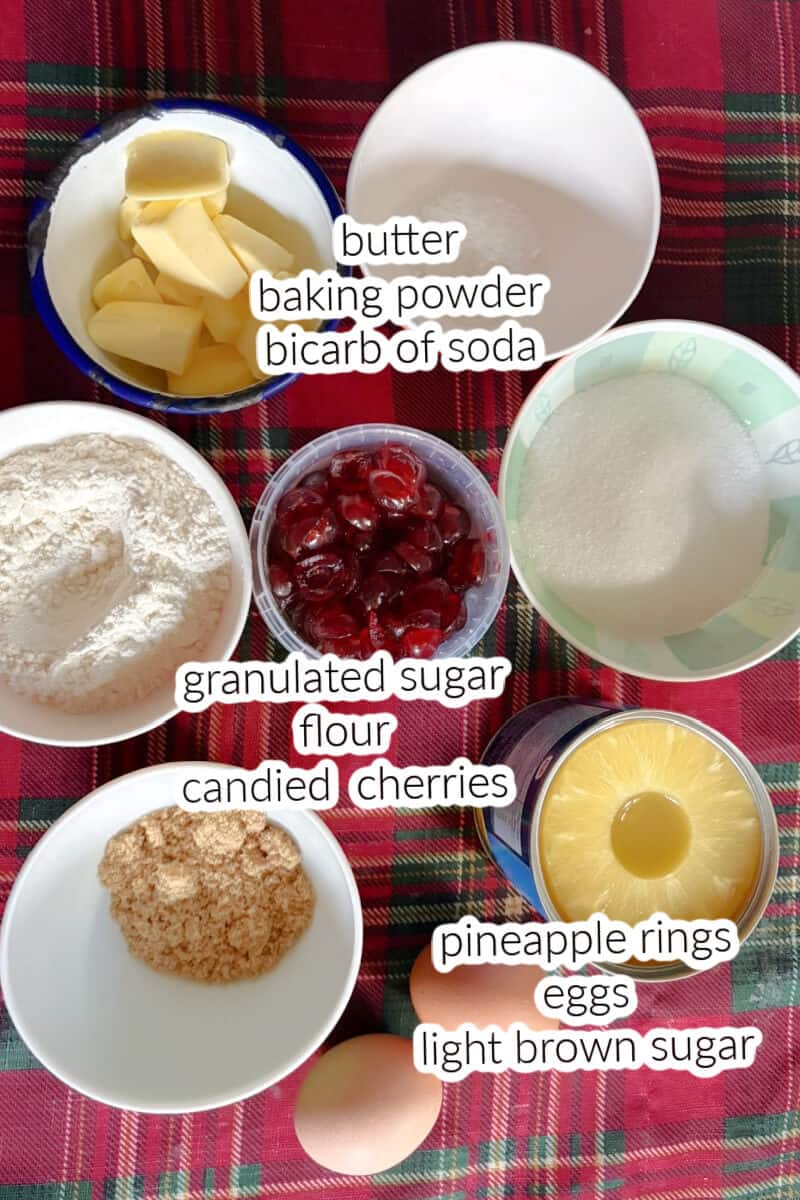
- canned pineapples - sliced pineapples look more spectacular in this dessert, rather than pineapple chunks
- candied cherries - or glace cherries, add a pop of colour, texture and sweetness. I have not tested this recipe with fresh cherries.
- light brown sugar - for sprinkling over the pan, you can also use dark brown sugar for a deeper colour and caramelisation
- plain flour - no need for any fancy brand
- granulated sugar - makes the sponge light and moist
- butter - soft + 1 tablespoon for greasing the pan
- eggs - 2 large eggs or 3 small eggs
- baking powder & bicarbonate of soda - add a good lift and keep the sponge light
- pineapple juice - from the tin to loosen the batter
Step-by-step photos and instructions
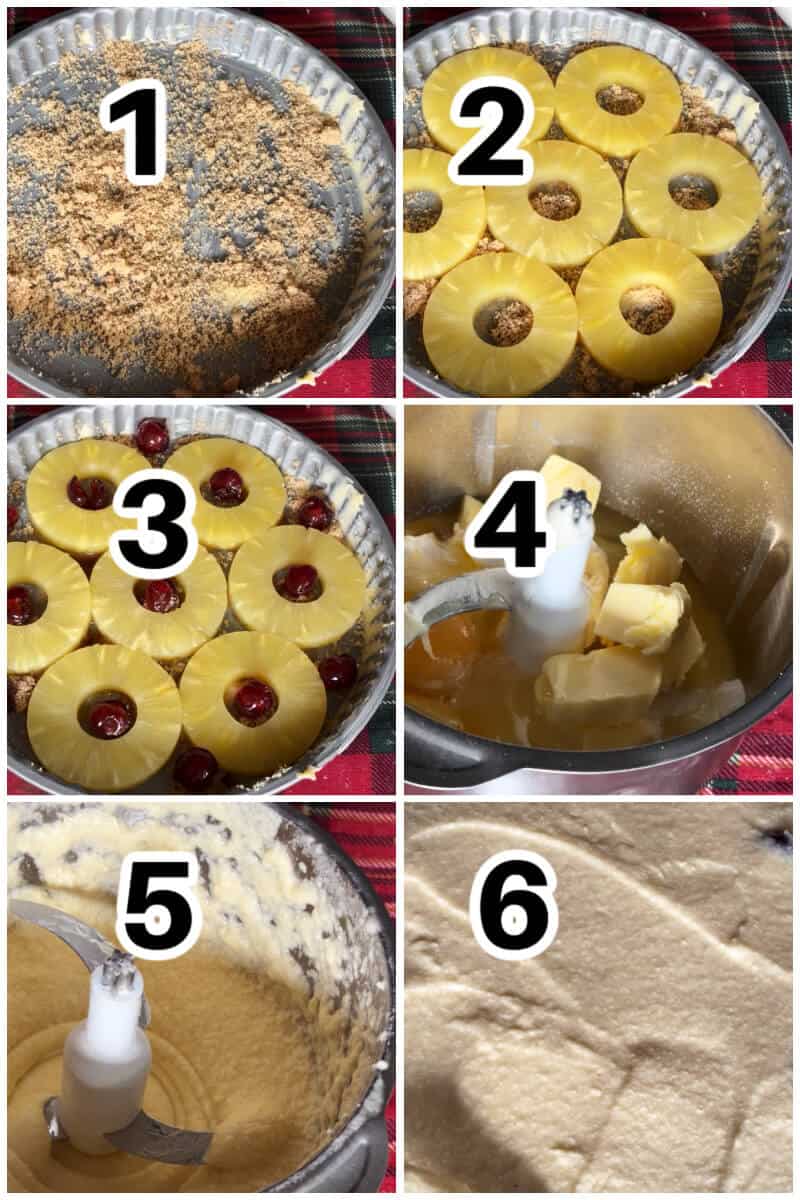
- butter the cake tin and sprinkle the light brown sugar over
- arrange the pineapple slices and the cherries
- in a food processor, add the flour, baking powder and bicarb of soda, sugar, butter and eggs, and pulse well to get a smooth paste
Alternatively, use a hand mixer to mix everything together until you get a smooth paste.
- add the pineapple juice to thin the batter up, then pour it over the fruit
- bake in the preheated oven at 180 degrees Celsius (350 Fahrenheit) for 30 minutes or until a skewer inserted in the middle comes out clean
After 20 minutes I transferred the cake tin to the lower rack in the oven, to avoid it browning too quickly, and I continued to bake it for a further 10 minutes.
- use a sharp knife to loosen up the edges, place a large plate, or tray bake on top, and turn the cake upside down
Expert tips
Before we start, we must make sure that the ingredients are at room temperature, the butter has to be soft (but not melted), and if you keep the eggs refrigerated, they should be out of the fridge at least an hour before.
But the most important thing, we need a cake tin that does not stick at all! Don't use tins with detachable walls, as the batter is quite thin and can leak out. The tin I used is a 23 cm / 9 inches.
Once the cake is out of the oven, allow it to cool slightly for 3-4 minutes, the sponge will start to come away from the edges of the tin. Use a sharp knife to run across the edges, then place a plate on top and turn the cake upside down swiftly.
Do not wait for the cake to cool down completely to turn it upside down, as the sugar at the bottom of the tin cools down, it will become very sticks and cake will stick badly.
Recipe FAQs
If the cake is soggy, if means the batter was too thin, as a result of too much liquid used - that could come from the eggs and pineapple juice. Depending on the size of the eggs used, you might have to use less pineapple juice for a thicker batter.
If the cake sticks to the pan is because the pan hadn't been been buttered well. Make sure you use plenty of soft butter to grease well both the bottom and the sides of the pan. It is important to turn the cake upside down while it's still warm, once the sugar hardens, it will be hard to remove the cake from the tin.
If you’ve liked this recipe or any other recipe on the blog then don’t forget to rate the recipe and let me know how you got on in the comments below, I love hearing from you! You can also FOLLOW ME on FACEBOOK, INSTAGRAM , YOUTUBE, TIK TOK , FLIPBOARD and PINTEREST to see more delicious food and what I’m getting up to.
Easy Pineapple Upside-Down Cake
Video
Ingredients
- 7 slices of canned pineapples
- 9 candied cherries ( glace cherries)
- 3 tablespoon light brown sugar
- 100 g plain flour (¾ cup + 1 tbsp)
- 100 g granulated sugar (½ cup)
- 100 g butter, soft + 1 tablespoon for greasing the pan (7 tablespoon + 1 tbsp)
- 2 large eggs
- 1 teaspoon baking powder
- ¼ teaspoon bicarbonate of soda
- 3 tablespoon pineapple juice from the tin
Instructions
- Butter a non-stick pan (non detachable walls, non springform), mine is 23 cm / 9 inches in diameter.
- Sprinkle over the light brown sugar, then arrange the pineapple slices and cherries over.
- Add the butter, flour, granulated sugar, eggs, baking powder and bicarbonate of soda to a blender and pulse well to get a smooth paste.
- Alternatively, add all ingredients to a large bowl, and use a hand mixer to beat everything together.
- Add the pineapple juice to the batter, and mix well again.
- Pour the batter over the fruit, and bake in the preheated oven at 180 degrees Celsius (350 Fahrenheit) for 30 minutes, or until a skewer inserted in the middle of the cake comes out clean.
- I transferred the cake from the top rack to the middle rack in the oven after 20 minutes to prevent the bake from browning too fast, and I continued to bake it for a further 10 minutes.
- Remove the cake from the oven, and leave it to cool down for 3-4 minutes, then run a sharp knife around the edges of the tin to loosen it up.
- Place a large plate on top of the tin, and turn the cake upside down swiftly.
Leave a Reply